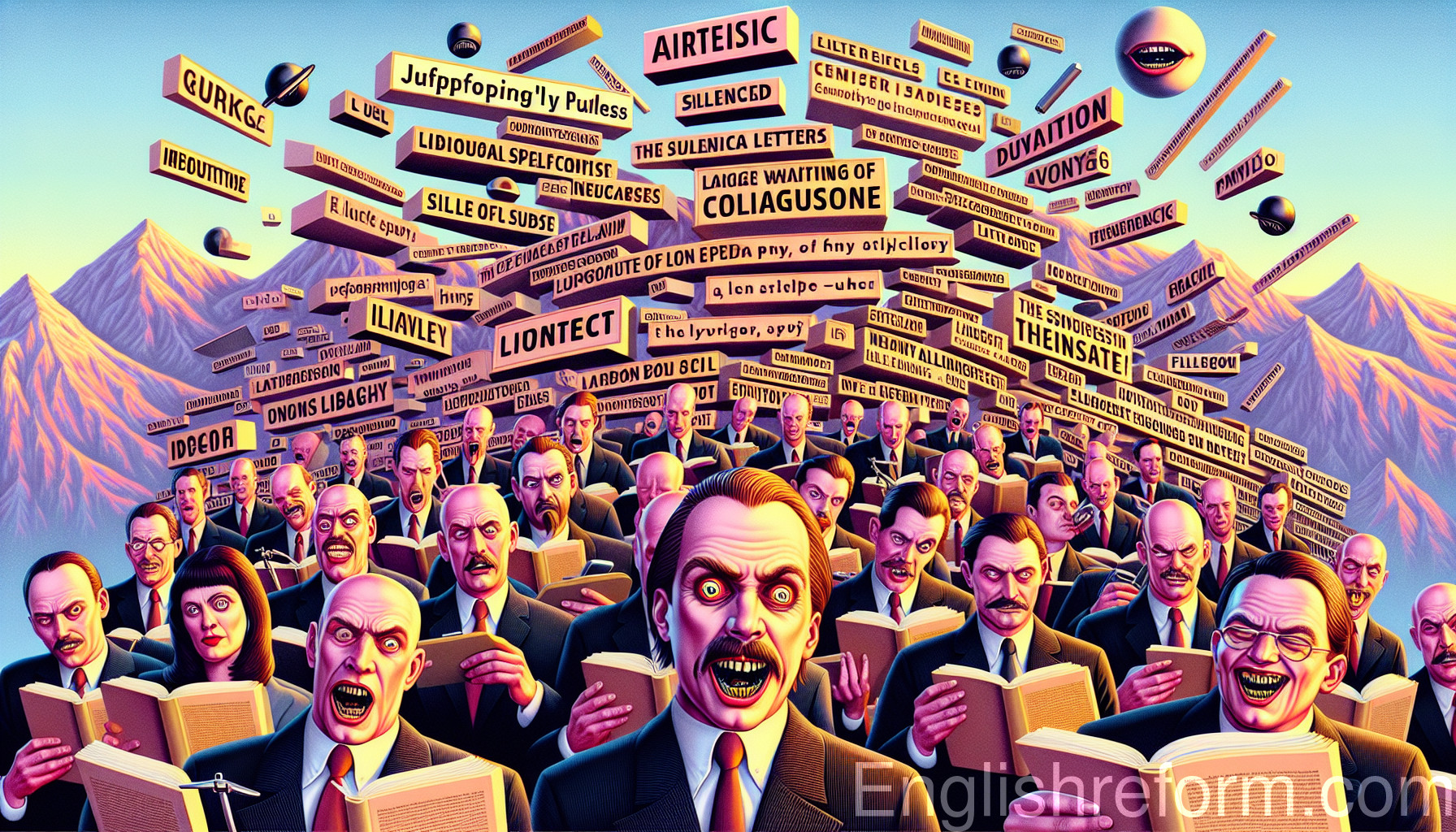
If language isn’t fun, you’re not doing it right. Syntax is just rhythm waiting to dance.
The Traditional Rule:Language is a tool for communication. Use it properly. Follow rules. Respect grammar. Obey clarity. Don’t get carried away.
Why It’s Broken:
Because language is not just a tool — it’s a canvas. It’s a dance. It’s the wild, wondrous, living voice of humanity. Reducing it to rules and rubrics is like reducing music to a metronome, or love to a legal contract.
Language is not meant to be purely efficient. It’s meant to sing. It’s meant to feel good in the mouth, tickle the ear, and make you want to shout, whisper, rhyme, seduce, argue, and laugh. When we strip English of its play, its rhythm, its pleasure — we make it dead.
This chapter is for the rebels, the poets, the word-drunk wanderers who see in language not obligation but opportunity. Not precision but possibility.
Absurdities and Revelations:
Why say “to whom does it belong” when “who’s it for” hits home?
Why settle for “elucidate” when “shine a light on” carries the metaphor?
Why deny yourself the delight of bubble, crackle, whizz, splat, slurp, jabber, flutter, flop?
Why do we police “ungrammatical” joy but ignore lifeless, soul-crushing prose?
Why praise the essay that obeys every rule but says nothing new — and punish the voice that stumbles with passion?
Examples of Pleasure in Action:
Shakespeare invented hundreds of words for fun — “bedazzled,” “swagger,” “zany,” “addiction,” “lonely.” He didn’t ask permission.
Zora Neale Hurston wrote in dialect, bending English until it danced. Critics called it “incorrect.” It’s now required reading.
Lewis Carroll didn’t follow grammar — he jabberwockied it. And you understood every word.
E. E. Cummings lowercased himself into legend.
bell hooks followed.David Foster Wallace’s footnotes were chaotic. Toni Morrison’s sentences broke gravity. Douglas Adams turned sarcasm into syntax.
Every one of them played. And we loved them for it.
British vs. American Flavors:
Brits love their understatement, double negatives, and irony-layered metaphors. (“Not bad.” Translation: Brilliant.)
Americans delight in punchy idioms, slapstick verbs, and cinematic monologue. (“He just up and left.”)
Both have poetry in their pulse — and yet both still try to grade it into submission.
The Reform Proposal:
Teach pleasure before prescription. Let students fall in love with words before making them diagram sentences.
Celebrate stylistic creativity. Reward vivid voice, brave structure, and musical rhythm — even if grammar takes a tumble.
Recognize context and intention. Sometimes a fragment is a mic drop. Sometimes repetition is a drumbeat. And sometimes grammar just gets in the way.
Encourage risk. Let students write a sentence that breaks every rule — if it leaves a scar of beauty behind.
Ditch the dryness. No more “in conclusion, I have shown…” End with a growl, a laugh, a twist. That’s English alive.
How It Would Work in Practice:
| Old Rule | Reform Style |
|---|---|
| “Avoid run-on sentences.” | “Or don’t, if the breathlessness is the point, if the cascade is the meaning.” |
| “Do not use exclamation marks.” | “Use them! Use them like drums! But only when you feel them!” |
| “One idea per paragraph.” | “Unless your idea needs to sprint, leap, collapse, and rebound across the page like a wild beast.” |
| “Keep your writing formal.” | “Unless informal is real, raw, and right.” |
| “Always clarify meaning.” | “Unless mystery is the meaning.” |