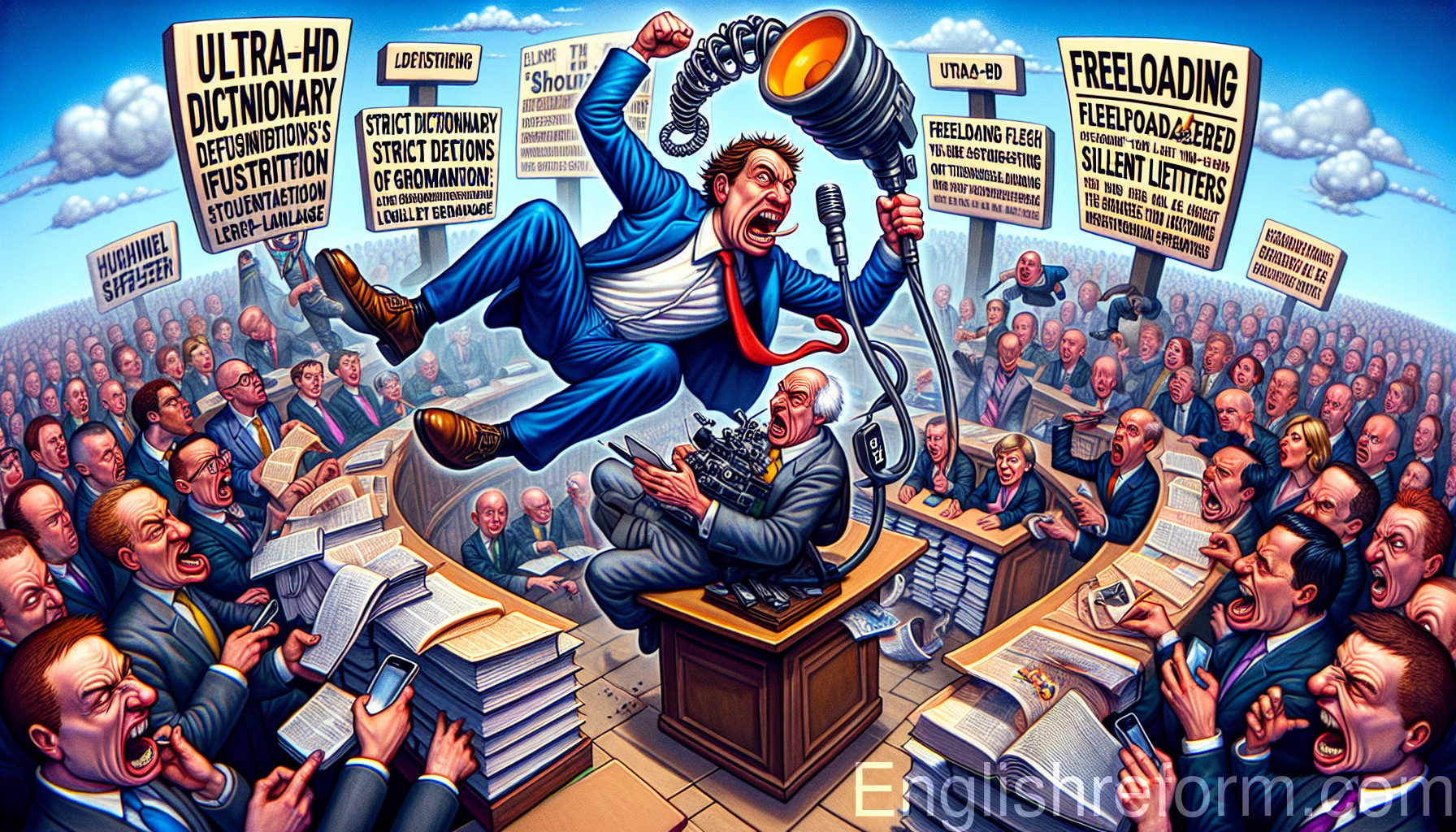
If the dictionary were a holy book, every teenager would be a heretic—and that’s exactly how it should be.
The Traditional Rule:
If it’s not in the dictionary, it’s not a real word. Dictionaries are the gatekeepers of valid English. They define correctness and settle disputes.
Why It’s Broken:
Because dictionaries are records of language use, not bibles. They follow usage — they don’t lead it. And they lag behind reality. The average English speaker coins, mangles, borrows, and blends new words daily. By the time a word makes it into a dictionary, it’s been living rent-free in our mouths and online feeds for years.
Also: dictionaries contradict each other, disagree across regions, and revise their content constantly. So which one is the “truth”?
Absurdities and Contradictions:
“Ain’t” was banned for decades — now it’s in every modern dictionary.
“Funner” was “not a word” — until enough people used it that it had to be included.
“Literally” now includes its opposite — because people kept saying “I literally died” and not dying.
“Selfie,” “YOLO,” and “doomscroll” got added after being mocked — now they’re immortalized.
“Irregardless” exists despite everyone saying it shouldn’t.
So which is it: is the dictionary protecting English? Or documenting its unstoppable march?
Real-Life Usage Wins Every Time:
| Real World | Dictionary (Then) | Dictionary (Now) |
|---|---|---|
| “Google it” | Not a verb | Verb, noun, lifestyle |
| “They/them” for one person | “Unacceptable” | Now accepted, with a whole usage note |
| “Adulting” | Slang nonsense | Now official (and depressingly relatable) |
| “Mansplain” | Feminist jargon | Now Merriam-Webster approved |