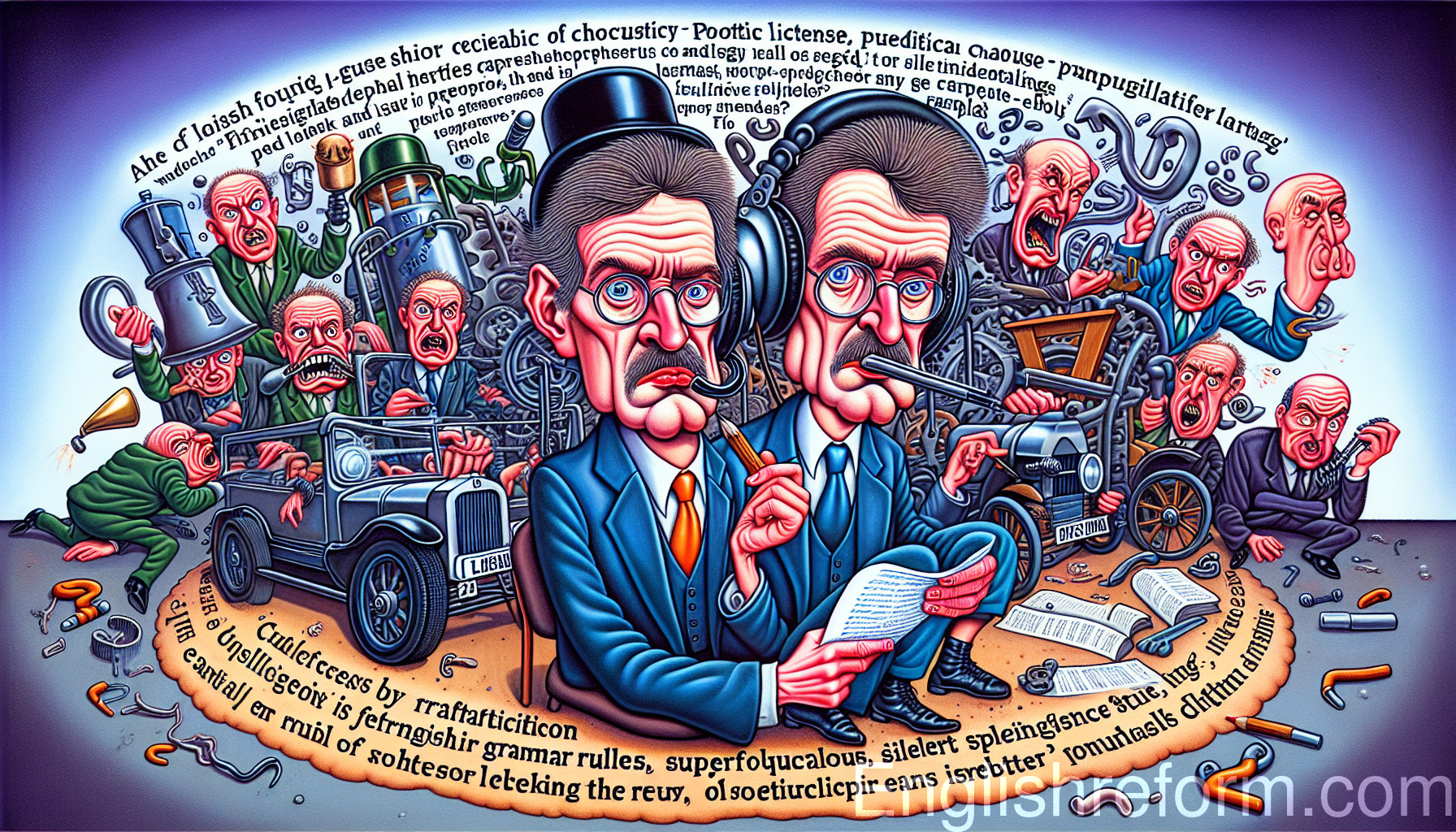
Sometimes grammar gets in the way of a damn good sentence.
The Traditional Rule:
Writers should follow formal grammar, sentence structure, and usage norms—unless they’re poets or novelists with “license” to break the rules.
Why It’s Broken:
Because every speaker is a poet at some point. Every email, song lyric, marketing slogan, stand-up routine, or heartfelt letter bends the rules of grammar—on purpose. “Poetic license” isn’t a privilege; it’s a necessity. Our most powerful communication happens when grammar steps aside to let rhythm, meaning, tone, and style do the talking.
Absurdities and Contradictions:
“I’m lovin’ it.” → Ungrammatical. Immortal.
“To boldly go where no one has gone before.” → Split infinitive. Still inspiring.
“Ain’t no mountain high enough.” → Double negative. Eternal anthem.
“This is the stuff dreams are made of.” → Ending with a preposition? Iconic.
“You complete me.” → Fragment? Sure. Also tears.
Formal grammar says:
❌ No fragments.
❌ No double negatives.
❌ No split infinitives.
❌ No starting with “And” or “But.”
❌ No ending sentences with prepositions.
Real life says:
✅ All of the above, if it feels right, sounds right, moves the reader.
Real-World Examples of Glorious “Mistakes”:
Advertising:
“Think different.” (Apple) — Adjective used where adverb is expected. But nobody forgot it.
“Because you're worth it.” (L'Oréal) — Sentence fragment. Powerful.
Literature & Poetry:
“And miles to go before I sleep.” (Robert Frost) — Begins with “And.” No one’s mad.
“He do the police in different voices.” (T.S. Eliot’s original title) — Grammatically off. Artistically perfect.
e.e. cummings famously dropped punctuation and capitalization entirely.
Music:
“Ain’t nobody got time for that.”
“Me and you and you and me”
“It don’t matter if you’re black or white”
“She be wildin’ out”
British vs. American Variants:
Brits revere the “Queen’s English,” but even Shakespeare made up words, broke syntax, and played with meter.
Americans are bolder with fragment sentences, ellipsis use, and casual tone—but are still haunted by red-pen purists.
Both cultures pretend “rules” matter—until they write fiction, headlines, or speeches.
The Reform Proposal:
Stop treating poetic license as exclusive to poets.
Normalize grammatical flexibility in emotional, expressive, and stylistic writing.
Encourage rhythm, cadence, and tone as legitimate drivers of language choices.
Teach rules and when (and why) to break them.
How It Would Work in Practice:
“Because tired.” → ✅ Emotion over grammar.
“She don’t need nobody.” → ✅ Emphasizes tone.
“But I loved her.” → ✅ Starting with “But” can be dramatic, not wrong.
“This is what it’s all about.” → ✅ Ending with a preposition when it’s natural.
Final Word: Break It Beautifully.
Language is an art form as much as it is a tool. If grammar is the scaffolding, then style is the architecture. Sometimes the most unforgettable phrases are the ones that would never pass a grammar exam. And that’s okay. That’s English.
Forget perfection.
Write what sings.
Say what feels.
Speak what works.