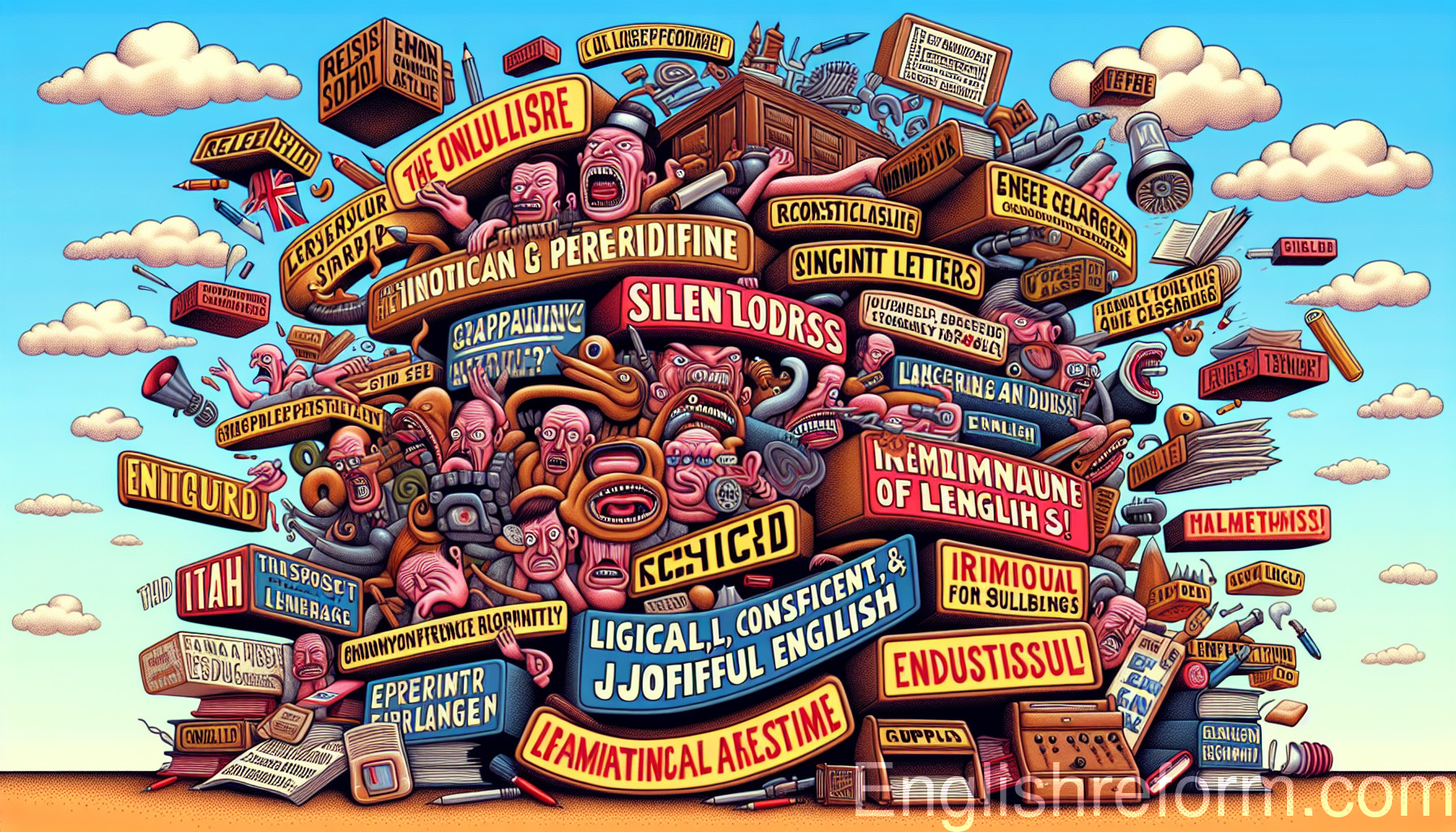
English doesn’t need to be easier — it needs to stop being a linguistic gaslight.
The Traditional Rule:
There isn’t one. English is a glorious mess — inherited, improvised, and institutionalized. You’re expected to memorize it, not question it. Don’t ask why. Just learn it. And if you can’t, too bad.
Why It’s Broken:
Because English is the most widely spoken second language in the world — and the least learner-friendly. It contradicts itself, mocks consistency, and wears its illogic like a badge of honor. Native speakers shrug. Learners suffer. Pedants gatekeep. Meanwhile, clarity, creativity, and joy get buried beneath a mountain of irregulars, exceptions, and obsolete habits no one can justify — except with the fatal phrase: “That’s just how it is.”
Let’s Revisit What We’re Reforming:
-
Articles and determiners that don’t follow logic
-
Verb formations that ignore pattern
-
Pronunciation rules with invisible letters
-
Plurals that defy math
-
Spellings that insult phonetics
-
Capitalization that serves ego over clarity
-
Prepositions treated like grammatical landmines
-
Contractions punished instead of celebrated
-
Homophones that demand memorization without logic
-
Idioms that confuse more than they communicate
-
Acronyms that gatekeep knowledge
-
Style rules treated as commandments
-
Ghost letters haunting modern literacy
And What’s the Solution?
Consistency. Phonetics. Clarity. Simplicity. Play.
Language should reflect how people speak, think, and write today — not how scribes documented court English under Queen Victoria. We’re not burning down the house. We’re cleaning it. Making space for new guests. Replacing the dangerous stairs with ramps. Letting in the light.
What English Could Look Like:
-
Spelled as it sounds
-
Said as it’s meant
-
Written as it’s lived
-
Taught with logic
-
Learned with delight
-
Evolved, not embalmed
Real Reform = Real Empowerment:
-
Students will spend less time memorizing contradictions, more time expressing thoughts.
-
Immigrants and global learners will stop tripping over absurd exceptions.
-
Creatives will feel emboldened to stretch, flex, and play.
-
Rules will serve meaning, not authority.
-
Style will serve tone, not tyranny.
-
Grammar will be a friend, not a bouncer at the door of literacy.
Final Word: Reform Isn’t Rebellion — It’s Rescue.
English doesn’t need to be flattened. It needs to be sharpened. It needs to become what it already claims to be: the language of ideas, of the internet, of global conversation. A living, moving, vibrant medium of human thought.
So let’s reform it.
Not to dumb it down — but to wake it up.
Not to destroy it — but to liberate it.
Let English become what it was always meant to be:
Logical.
Consistent.
Joyful.
Ours.