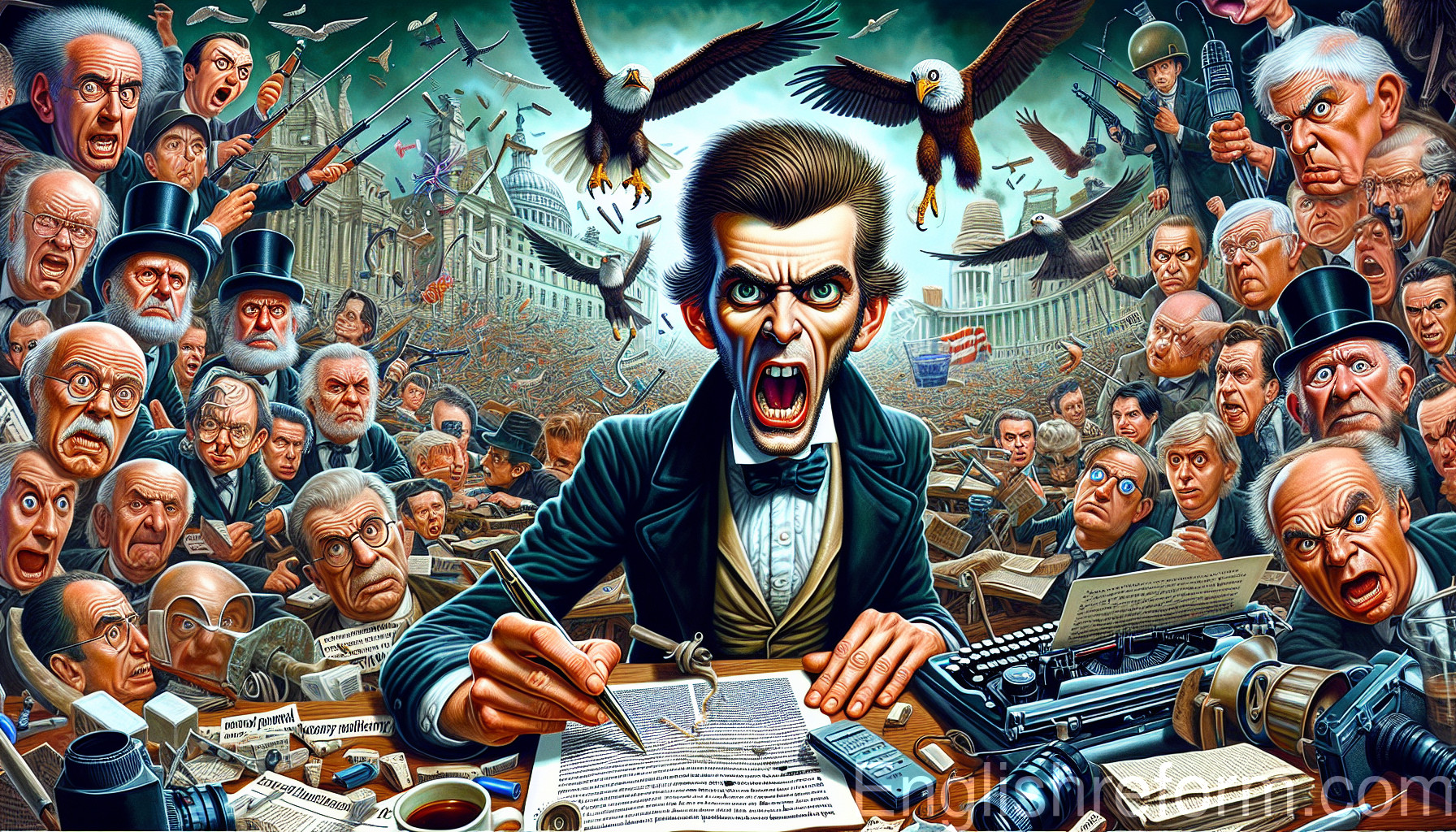
The apostrophe has no idea what job it’s doing, but it’s really confident about it’s position.
The Traditional Rule:
Contractions are used to shorten two words into one, using an apostrophe to mark the missing letters. Apostrophes also indicate possession. Except when they don’t. Or when they indicate plurals (but shouldn’t). Or when they're just there because someone panicked.
Why It’s Broken:
Because apostrophes have become the most overused, misused, and misunderstood symbol in English. They serve too many purposes (contraction, possession, and — wrongly — plurals). There’s also widespread disagreement about their placement in proper names, singular possessives ending in "s", and contractions like “’tis” or “y’all’ve.” As for contractions — some are encouraged (“don’t”), others are frowned upon (“ain’t”), and some are used but not understood (“he’d’ve”).
Absurdities and Contradictions:
-
“It’s” = it is. “Its” = possessive. The only possessive that doesn’t get an apostrophe. 🤯
-
“James’ car” vs. “James’s car” — style guides disagree.
-
“Children’s toys” but “the girls’ room” — depends on pluralization.
-
“Who’s there?” = “Who is there?” But “whose” = possessive.
-
“Apostrophe’s are used for plural’s.” ← This is wrong, yet seen on 80% of local signage.
Contraction Contradictions:
-
“Aren’t I?” — Really? Shouldn’t it be “amn't I”? But we just… don’t say that.
-
“He’d’ve gone.” → Common in speech, terrifying in writing.
-
“Y’all’d’ve known better.” → Grammatically perfect in Southern English. Unacceptable in formal prose.
-
“Ain’t” = highly stigmatized despite being widely understood and used.
Real-World Examples:
-
“CD’s for sale.” ← That’s not possessive. It’s just scared of pluralizing.
-
“Mens’ room.” ← Not correct. “Men’s.”
-
“The Smiths’ house” vs. “The Smith’s house.” ← One is a family. One is a singular Smith.
-
“We’ll’ve arrived.” ← Legitimate contraction that’s treated like an alien lifeform.
-
“Its tail wagged.” ← Looks like it’s missing an apostrophe, but it’s correct. Madness.
British vs. American Variants:
-
UK often drops contractions in formal writing more strictly than the US.
-
Apostrophe rules are mostly shared, but British signage also commits frequent crimes: “Cream Tea’s Served Daily.”
-
Ireland and Scotland are more tolerant of dialectal contractions in literature (“he’llnae,” “amnae”).
The Reform Proposal:
-
Use apostrophes for possession only when clarity is at risk — otherwise drop them entirely.
-
Standardize contraction rules and allow natural, logical forms (“amn't” = yes).
-
Eliminate apostrophes in pluralization. Never, ever write “banana’s.”
-
Accept dialectal contractions in informal and creative writing without shame.
How It Would Work in Practice:
-
CDs for sale ✅
-
Its tail wagged ✅
-
Whose turn is it? ✅
-
I ain’t going. ✅
-
We’ll’ve seen it already. ✅
-
James’s book OR James’ book = Both acceptable ✅
-
The girls room → Girls’ room ✅
-
Y’all’d’ve done the same ✅
Final Word: Apostrophe Apocalypse Now.
This mark has carried too much for too long. Let’s free it from misuse, give it a single job, and let contractions breathe. After all, if we can speak it smoothly, we should be able to write it without a grammar trial.